Since February 2022, every home in Scotland must have interlinked fire alarms: a smoke alarm in the room used most, a smoke alarm in every hallway and landing, and a heat alarm in the kitchen, all linked so that when one sounds they all sound. A carbon monoxide alarm is also needed where there is a fuel-burning appliance or flue. Sealed 10-year battery alarms or mains-wired alarms are both acceptable.
Plenty of homes in Paisley and across Renfrewshire still have a single battery smoke alarm in the hall, the same one that has been there for years. The rules changed in 2022, and it is easy to have missed the change. The good news is that getting your home up to scratch is usually a straightforward job, and once it is done you are covered for years. Here is what the standard asks for, in plain terms.
What Changed in February 2022
Since 1 February 2022, every home in Scotland has had to meet the same standard for fire and smoke alarms. Before that, the tougher rules mainly applied to private rented homes. Now they cover owner-occupied homes too, whether you live in a tenement flat in Glasgow, a semi in Renfrew or a detached house in Bearsden.
The big change is the word interlinked. Every alarm in the home has to be connected to the others, so that when one detects smoke or heat, they all sound. If a fire starts in the kitchen while you are asleep upstairs, you hear the alarm on your landing straight away rather than waiting for smoke to reach you.
Where Each Alarm Has to Go
The standard sets out which type of alarm goes where. All of them must be fixed to the ceiling.
- Living room: One smoke alarm in the room you use most for general daytime living. For most families that is the living room.
- Hallways and landings: One smoke alarm in every circulation space, so every hallway and every landing. A house over two or three floors needs one on each level.
- Kitchen: One heat alarm in every kitchen. A heat alarm reacts to a rise in temperature rather than smoke, so it will not go off every time the toast catches.
- All interlinked: Every one of those alarms has to be linked to the others, so they all sound together.
Need Your Home Brought Up to Standard?
Call Sean at S.A.W Security Solutions on 07414 948122. We fit interlinked smoke, heat and carbon monoxide alarms across Paisley, Renfrewshire and Glasgow, with a free quote up front.
Call for a Free QuoteCarbon Monoxide Alarms
Carbon monoxide has no smell, no colour and no taste, so you cannot tell it is there without an alarm. Under the standard, you need a carbon monoxide alarm wherever there is a carbon-fuelled appliance or a flue.
- What counts: Any appliance that burns gas, oil, coal or wood, such as a gas fire, an open fire, a wood-burning stove or the gas or oil appliance that supplies your hot water.
- Flues: A flue running through a room also needs to be covered, even if the appliance itself is elsewhere.
If you are not sure whether your home needs one, we will check when we visit and tell you exactly what is required.
Sealed Battery or Mains-Wired?
Both are acceptable under the standard. Which one suits you depends on your home and how much disruption you want.
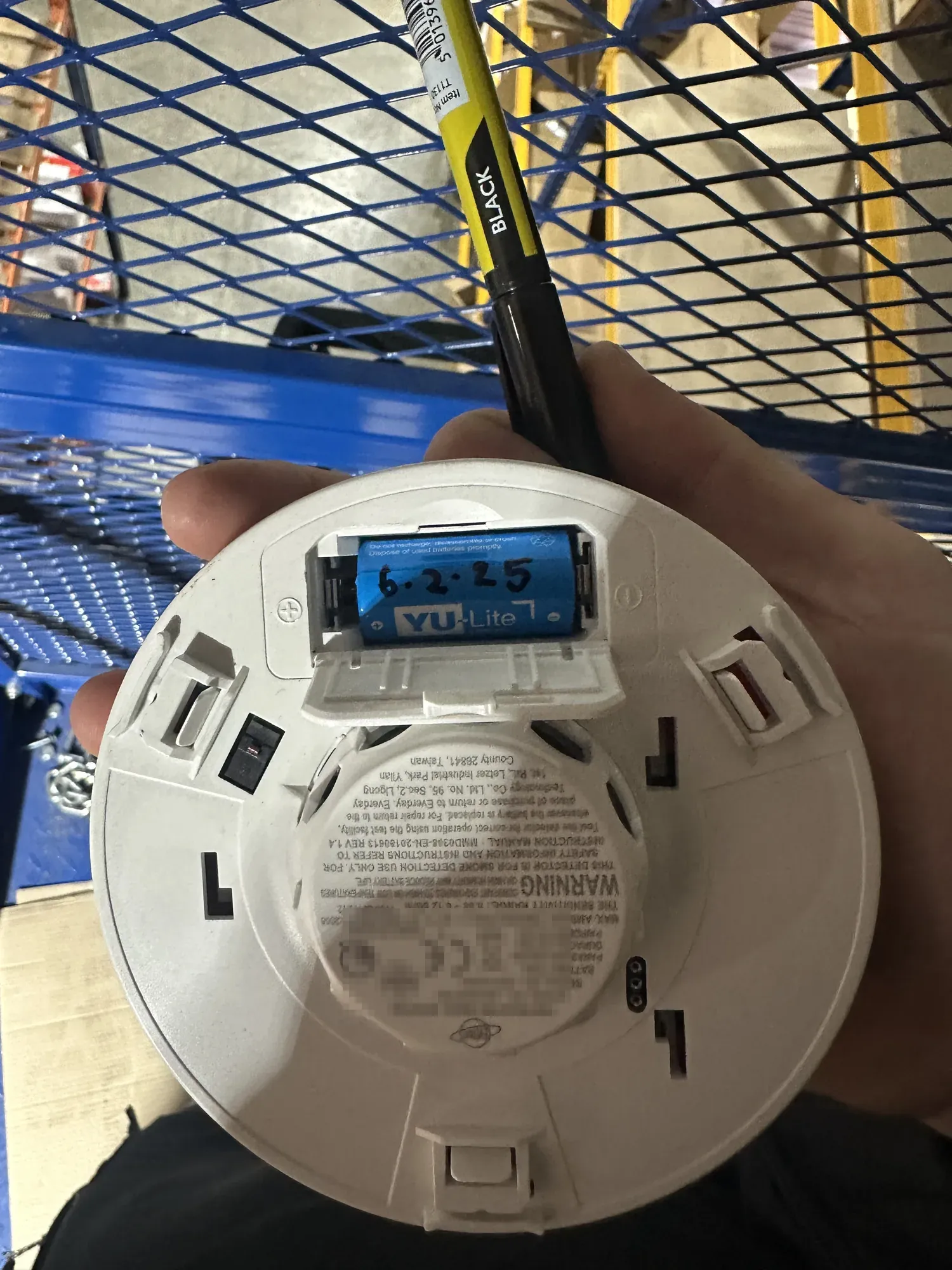
- Sealed long-life battery alarms: These use a tamper-proof lithium battery sealed inside the unit. There is no wiring needed and they interlink by radio, so fitting them is quick and tidy. They suit most finished homes.
- Mains-wired alarms: These are wired into the electrics and interlinked. They are a good choice if you are rewiring or renovating, when the walls and ceilings are opened up anyway.
What is not acceptable is the old style of alarm with a battery you can pull out and swap. Standalone alarms that are not linked to each other do not meet the standard either. Our domestic smoke alarm installations typically cost between £150 and £700, depending on the size of the home and the number of alarms needed.
Whose Responsibility Is It?
If you own your home, meeting the standard is your responsibility. Landlords in Scotland already had to comply before 2022, so if you rent privately your landlord should have this in place.
At S.A.W Security Solutions, Sean personally fits every alarm. We will walk round your home, work out exactly which alarms you need and where, fit them neatly to the ceiling, test that every alarm sets the others off, and show you how to test them yourself. All our installation work comes with a 12-month workmanship guarantee. If you are also thinking about an intruder alarm, it is often worth doing both in one visit.
Frequently Asked Questions
Yes. Since 1 February 2022 the standard applies to every home in Scotland, whether it is owned or rented, a house or a flat. Homeowners are responsible for their own homes, and landlords were already required to meet it.
A heat alarm. The standard asks for a heat alarm in every kitchen, ceiling-mounted and interlinked with the other alarms. Heat alarms respond to a rise in temperature, so they are far less likely to go off during normal cooking.
No. Sealed, tamper-proof alarms with long-life lithium batteries are acceptable, as are mains-wired alarms. Whichever you choose, every alarm must be ceiling-mounted and interlinked.
Our smoke alarm installations typically cost between £150 and £700, depending on the size of your home, how many alarms are needed and whether you need a carbon monoxide alarm too. Call us on 07414 948122 for a free quote.